
In modern industrial processes, controlling the flow of liquids, powders, and slurries is essential. Among the many types of valves, the Pneumatic Knife Gate Valve stands out for its ability to handle viscous, abrasive, or particle-laden materials efficiently. Unlike manual or hydraulic valves, pneumatic knife gate valves offer fast, reliable, and automated operation, making them indispensable in industries like chemical processing, mining, pulp and paper, and wastewater treatment.
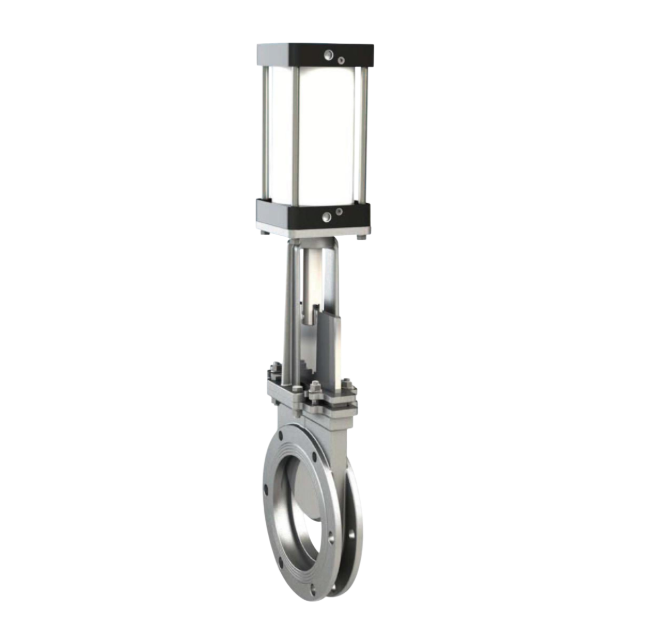
A Knife Gate Valve is designed to cut through heavy or viscous media while providing reliable flow control. Its key components include:
Knife gate valves are particularly effective for slurries, powders, or fluids containing solids, as the sharp edge of the gate cuts through materials, preventing clogging and ensuring smooth operation.
While knife gate valves can be manual or hydraulic, pneumatic actuation offers several key advantages in modern industrial settings:
In summary, pneumatic actuation combines speed, automation, safety, and the ability to handle challenging materials, making it the preferred choice for industrial knife gate valves.
A typical pneumatic knife gate valve consists of:
| Feature / Criteria | Pneumatic Knife Gate Valve | Manual Knife Gate Valve | Hydraulic Knife Gate Valve |
|---|---|---|---|
| Operation Method | Compressed air actuator | Handwheel or lever | Hydraulic cylinder |
| Speed | Fast opening/closing, milliseconds to seconds | Slow, depends on human effort | Moderate, depends on hydraulic system |
| Automation & Remote Control | Fully compatible with PLC and automated systems | Not suitable for automation | Can be automated but requires complex setup |
| Force Output | High, sufficient to cut through viscous or abrasive media | Limited by human strength | Very high, can handle large valves or heavy media |
| Safety in Hazardous Environments | Excellent, no electricity at valve | Safe, but requires human presence | Good, but leaks and oil hazards possible |
| Maintenance Complexity | Low to moderate, mainly actuator and seals | Low, simple mechanical parts | Higher, hydraulic oil system requires monitoring |
| Cost | Moderate | Low | High |
| Best Use Case | Automated industrial processes, abrasive/viscous media | Small-scale manual operations | Large-scale heavy-duty valves or high-pressure applications |
Professional Insight:
Pneumatic actuation is the preferred choice because it balances speed, reliability, safety, and automation potential. Manual valves are slow and labor-intensive, while hydraulic valves are more complex and costly.
When choosing a pneumatic knife gate valve, consider:
Maintenance tips:
A Pneumatic Knife Gate Valve is a robust, reliable, and automation-ready solution for handling thick, abrasive, or particle-laden media. Compared to manual or hydraulic alternatives, pneumatic actuation offers faster operation, safer control, and seamless integration into modern industrial systems. Choosing the right valve ensures improved process efficiency, reduced downtime, and safe handling of challenging materials.